of adults wanted professional mental health or substance-use help but did not receive it.
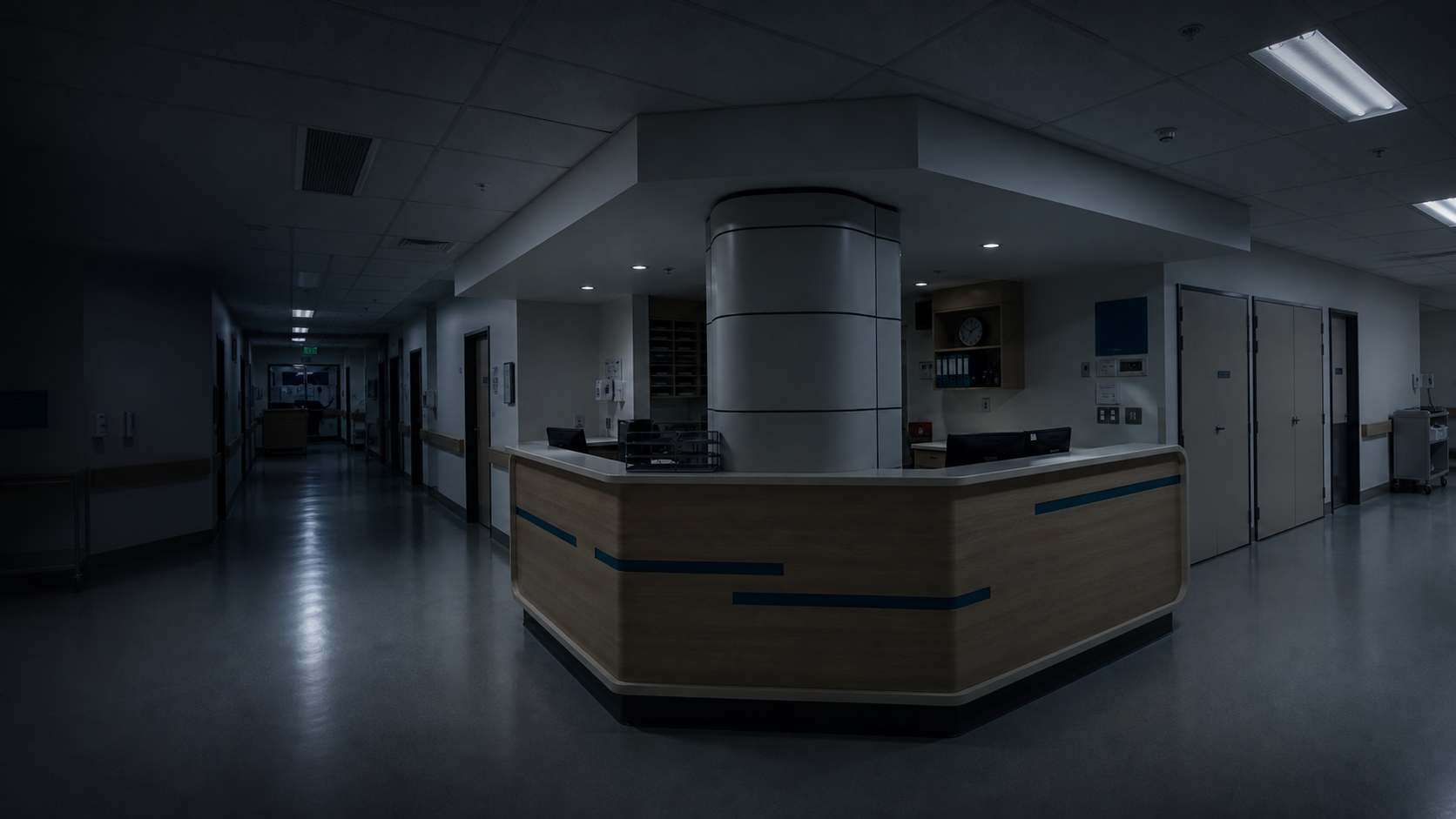
New Zealand's care system is carrying more pain than it was built to hold.
When the ward is full, the crisis moves into the waiting room.
This is what system failure looks like before the lights go out: distress rises, access falls, referrals are declined, private work is normalised, and the people holding the system together burn out or leave.
fewer 19-25-year-olds accessed specialist mental health and addiction services over five years.
of addiction specialist referrals were declined in 2023/24, almost double the 2019/20 share.
of public-hospital nursing shifts in Te Whatu Ora data were below target staffing numbers.
If need is rising while access narrows, the system is failing.
A single metric can be made to look manageable. The pattern cannot: young people report more distress while fewer reach specialist care; addiction referrals are declined more often while drug harm rises; public hospitals inherit the complex cases while private contracts take the easier work; aged care runs short of beds while hospital wards jam.
Deep dives
Choose the pressure point.
The load
The demand is public. The bottleneck is public too.
In 2024/25, 14.3% of adults had high or very high psychological distress. For young people aged 15-24, the rate was 22.9%, up from 7.7% in 2014/15. Specialist access has not kept pace with need, and access for 19-24-year-olds continued to fall even as some headline access measures improved.
Mental health: actual load vs system reach
Each bar is people. The gap is the story.
The specialist figure is not a direct capacity ceiling, but it shows how narrow the specialist pathway is compared with population-level distress and unmet demand.
Nursing shifts below target
Public hospital shifts where needed care hours exceeded supplied nursing hours.
28%
below target staffing
NZNO analysis of Te Whatu Ora safe-staffing data found more than a quarter of shifts were below target, with some wards below safe staffing levels almost all the time.
Distress over time
High or very high psychological distress among adults.
Better diagnosis and reduced stigma mean more people are counted now. But the K10 distress trend is a symptom screen, not a diagnosis, and it is still rising.
Diagnosis caveat
Do not let the diagnosis caveat become an excuse.
Modern screening, online literacy, and reduced shame make mental health conditions easier to identify than a generation ago. That matters, but it does not explain away every warning light. This site separates diagnosis from distress: it treats diagnosis growth as a mixed signal, while highlighting comparable survey distress, unmet-help measures, declined referrals, and falling specialist access where the failure signal is harder to dismiss.
Failure pattern
The strongest evidence is not one bad number. It is the direction of travel.
Where one indicator softens the case, the adjacent system indicator often sharpens it. If youth distress is rising, fewer young people reach specialist care, and the nurses expected to keep wards safe are short-staffed shift after shift, the system is not coping.
of 15-24-year-olds had high or very high psychological distress in 2024/25, up from 7.7% in 2014/15.
of 19-24-year-olds used specialist services in 2024/25, down from 6.1% in 2020/21.
of addiction specialist referrals were declined in 2023/24, up from 4.7% in 2019/20.
nurses short on an average public-hospital shift in 2024, according to NZNO's Infometrics analysis.
Clinical witness
Psychiatrists and psychologists are saying the quiet part out loud.
The clinical workforce is describing a system where thresholds rise, referrals fall, private waitlists blow out, and public teams lose the specialists needed for the most complex distress.
One in five psychiatrist positions vacant.
RNZ reported public-sector psychiatrist vacancies alongside private waits extending beyond a year. Dr Hiran Thabrew, then chair of the New Zealand College of Psychiatrists, said the workforce had not kept pace with the surge in people seeking help.
Private waits are not a pressure valve anymore.
RNZ reported people being told they were "not sick enough" for public services while private psychologist wait times were also blowing out. The New Zealand College of Psychologists described dire shortages, soaring demand, and high burnout.
Training more people is not enough if the system cannot keep them.
A 2024 study of 380 registered psychologists described an estimated deficit of 1,000 psychologists and public-service waits extending to nine months. A 2025 NZMJ article reported about 215 psychiatrists leaving public mental health services over five years.
Justice overflow
When care arrives too late, the courts become the mental-health triage desk.
This is not an argument that mental illness equals criminality. It does not. It is an argument that untreated psychosis, addiction, trauma, and severe distress are showing up downstream in places built for punishment, not recovery.
consecutive defendants were assessed by a New Zealand forensic psychiatry service for fitness to stand trial in a recent published study.
had psychotic disorders as the most common primary diagnosis in that fitness-to-stand-trial cohort; 20% had schizophrenia.
of prisoners nationwide met the diagnostic threshold for a mental-health or substance-use disorder in 2023, according to Corrections figures reported by RNZ.
of prisoners would meet criteria for a mental-health or substance-use disorder during their lifetimes, showing how late the state often intervenes.
That is not justice working. That is healthcare arriving through a courtroom door.
A serious recovery plan must fund early psychosis services, crisis response, addiction treatment, forensic mental health capacity, supported housing, and community follow-up. Otherwise the country keeps paying for late-stage failure through Police, courts, prisons, victims, families, and clinicians.
The front line
The people patching the gaps are being asked to pay with their health.
Burnout is not a mood. It is a workforce risk, a safety risk, and a retention risk. Nurses are being asked to absorb missing staff, unsafe acuity, violence, delayed care, and moral injury, then smile through another shift because the ward still has patients in it.
nurses short on an average public-hospital shift in 2024; the average shortage was worse in 2023 at 684, with a maximum shortage of 937 nurses.
of mental health nurses surveyed by NZNO reported being physically threatened within a 12-month period.
of mental health nurses surveyed reported being assaulted within a 12-month period.
"They're crying. It's heartbreaking."
Debbie Handisides, Burwood Hospital spinal injury unit nurse, RNZ"We work like machines."
Debbie Handisides, Burwood Hospital spinal injury unit nurse, RNZ"It's actually really scary."
Jade Power, Auckland paediatric nurse and NZNO delegate, Kaitiaki"Patient harm, including deaths."
Dr Gary Payinda, Northland emergency doctor, RNZ"Clinicians and patients are being asked to settle for less."
Association of Salaried Medical Specialists"By keeping them poor, they are driving this burnout."
Anita Cook, Wellington gerontology nurse and NZNO delegate, Kaitiaki"Patient care is compromised."
NZNO Health Service Cuts Survey, Te Whatu Ora member response"Burnout and resignation will begin."
NZNO Health Service Cuts Survey, Te Whatu Ora member response"She feels defeated by what we are facing on a daily basis."
Wairarapa Hospital nurse, reported by RNZ"Not sick enough to get help."
RNZ summary of people being turned away from mental health services"If the nurses suffer so do the patients."
NZNO Health Service Cuts Survey, Te Whatu Ora member responseA patient died after waiting three hours in a packed emergency department.
Staff told RNZ the department was critically short-staffed and the patient should have been seen within an hour.
A preventable death followed a cardiac alarm no one heard.
A coronial inquiry found the monitor alarm volume had been turned down while the patient waited for a cardiology assessment.
A pregnant woman and her stillborn child died after delayed ICU admission.
RNZ reported an internal investigation found multiple documentation gaps and delay in critical care.
Elder care
Older people are being left at the sharp end of the bottleneck.
Aged care is not separate from the health crisis. When there are not enough care beds, home supports, nurses, dementia places, or hospital step-down options, older New Zealanders wait longer, families burn out, and neglect becomes easier to hide inside an overloaded system.
aged residential care beds could be missing by 2032 if historic building rates continue, according to Health NZ analysis reported by RNZ.
was the average wait for high-needs dementia and psychogeriatric residents assessed as high priority for aged residential care placement.
The Aged Care Commissioner found care-home systems inadequate in a 2024 wound-management case involving delayed referral, confusing records, and missed wound-photo requirements.
Privatisation test
Contracting out care is not the same as building a health system.
New Zealand is already using private hospitals to clear elective surgery backlogs, and Health NZ has been directed toward longer outsourcing contracts. A serious public case for this must answer the international evidence: private contracts can buy activity, but they can also lock in cost, fragment accountability, and leave the public system holding the hardest patients.
Change my mind.
Show that long-term private contracting will increase total workforce capacity, train the next generation, publish comparable costs and outcomes, keep complications from falling back on public hospitals, and improve access for rural, poor, disabled, elderly, and complex patients. If it cannot do those things, it is not a rescue plan. It is a transfer of risk.
PFI built hospitals, then locked the NHS into expensive repayments.
The UK Private Finance Initiative gave governments new buildings without upfront public borrowing, but long contracts later squeezed budgets. The National Audit Office also documented the rescue of Carillion's failed PFI hospital contracts after the contractor collapsed.
The first privately run NHS hospital contract ended early.
Circle took over Hinchingbrooke Hospital in 2012 and moved to withdraw in 2015. A Parliamentary Public Accounts Committee report examined the withdrawal, while the hospital was placed in special measures after serious quality concerns.
Private insurance did not deliver affordability.
KFF estimates Americans owe at least US$220 billion in medical debt. Commonwealth Fund research found administrative complexity is a major component of excess US health spending, and underinsured adults still avoid care because of cost.
Private surgical contracting can raise costs without fixing waits.
Alberta analysis found the average cost per outsourced procedure rose 79% since 2019 while some cancer surgery waits worsened. The policy risk is simple: moving easy cases can drain staff and money from public operating rooms.
Private providers are most attractive for predictable, low-complexity cases. Public hospitals keep trauma, ICU, complications, frailty, mental health crisis, and messy multimorbidity.
The same surgeons, anaesthetists, nurses, and technicians cannot be in two theatres at once. Outsourcing only helps if it adds staff rather than shifting them.
If prices, outcomes, complications, transfers, and margins are commercially hidden, the public cannot know whether it bought capacity or rented a headline.
The money
Record spending can still be rationing when need rises faster.
Budget 2025 is the latest delivered Budget as of 22 May 2026; Budget 2026 is due on 28 May 2026. The current funding track still has to absorb population growth, ageing, inflation, workforce pressure, medicine costs, and an estimated hospital infrastructure backlog measured in tens of billions.
Budget 2025 new operating package
Health
$1.752b
$1.752b
Health received the largest positive new operating item, but the net Budget package was constrained by savings and reprioritisation.
Budget 2025 new operating choices
Health$1.752b avg p.a.
Investment Boost$1.660b
Defence and foreign affairs$477m
Education$381m
These are average annual operating amounts net of reprioritisation. The point is not that other sectors do not matter. It is that health need is no longer a normal line item.
Call to action
Make collapse politically impossible to ignore.
Ask every candidate, minister, board chair, and local MP for a public healthcare recovery plan with measurable mental health access, safe staffing, workforce retention, and infrastructure milestones. Include aged residential care, dementia care, and home support in the plan, because older people should not be the quiet casualty of hospital gridlock. Demand that any private contract publishes cost, outcomes, complication transfers, workforce impact, and equity impact.
Sources and method notes
- Te Hiringa Mahara: NZ Health Survey 2024/25 mental health summary
- Te Hiringa Mahara: young people missing out on mental health service access
- Te Hiringa Mahara: pressure on addiction treatment services
- Te Hiringa Mahara: mental health and addiction service monitoring
- Ministry of Health: NZ Health Survey 2023/24
- Ministry of Health: mental health module 2016/17
- NZNO: official nurse unsafe staffing figures
- Health NZ: nursing staffing levels OIA
- RNZ: hospitals short an average of 587 nurses every shift
- RNZ: mental health and addiction nurses under pressure
- RNZ: nurses warn patients are left in pain and soiled beds due to staffing shortages
- RNZ: emergency doctor says chronic understaffing risks patient harm
- Kaitiaki Nursing New Zealand: nurses and kaiāwhina rally for safe staffing
- ASMS: workforce plan expects everyone to settle for less
- RNZ: psychiatrist shortage, private waitlists, and public vacancies
- RNZ: shortages in the mental health service workforce
- RNZ: New Zealand College of Psychologists on workforce shortages
- NZMJ: why psychiatrists leave public mental health services
- Psychologist retention study: Aotearoa New Zealand workforce sustainability
- Forensic psychiatry study: 415 defendants assessed for fitness to stand trial
- Department of Corrections: comorbid substance-use and mental-health disorders among prisoners
- RNZ: mentally unwell inmates and Corrections mental-health figures
- Corrections: Te Ara Tika mental-health services report
- BMJ Open: burnout in New Zealand resident doctors
- Royal New Zealand College of General Practitioners: 2024 workforce survey
- NZNO: Health Service Cuts Survey booklet
- RNZ: Health NZ aged-care review and projected 12,000-bed shortfall
- RNZ: aged-care demand and policy options
- HDC: inadequate wound management in care home
- HDC: care of vulnerable rest home resident
- RNZ: elective surgeries delivered through private outsourcing
- RNZ: Health NZ told to give private hospitals 10-year outsourcing contracts
- Beehive: Elective Boost and private-hospital partnership
- UK Parliament: Circle withdrawal from Hinchingbrooke Hospital
- UK National Audit Office: Carillion PFI hospital contract rescue
- Commonwealth Fund: high US health spending and administrative costs
- KFF: burden of medical debt in the United States
- Parkland Institute: private surgical contracts, costs, and waits in Alberta
- Burwood Hospital source photo via The Spinoff; campaign edit created for this site
- New Zealand Parliament: current members of Parliament
- Vote NZ: official address-based electorate lookup
- Photon/OpenStreetMap address geocoding used by the MP lookup
- Stats NZ/Eagle Technology: 2020 general electorate boundary service
- New Zealand Budget 2025 package
- Budget Policy Statement 2026: operating and capital allowances
- Ministry of Health: Vote Health Budget 2025
- RNZ: Rotorua ED death
- RNZ: Waikato ED alarm death
- RNZ: delayed ICU admission investigation